Graph Signal Processing
Signal processing on non-Euclidean domains with applications to network analysis
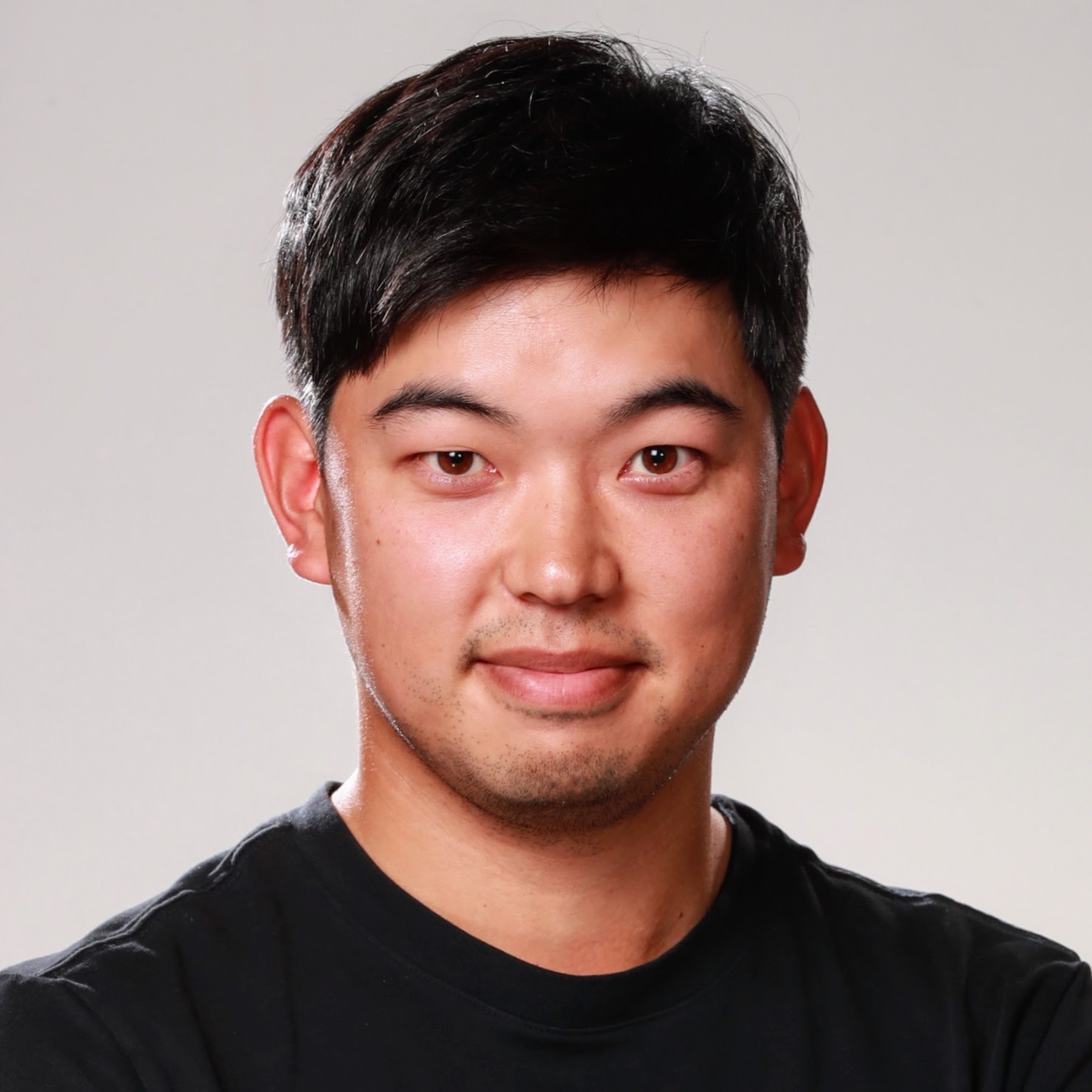
I am currently a Research Scientist at Sony AI, focusing on developing cutting-edge machine learning models for optimizing chip design. Previously, I was a postdoctoral researcher at the University of Southern California, collaborating with Prof. Antonio Ortega in electrical engineering and supported by the Swiss National Science Foundation (SNSF) through the Postdoc.Mobility fund. I completed my Bachelor’s at Yonsei University under the guidance of Prof. Dong-Hyun Kim and my Master’s at the Korea Advanced Institute of Science and Technology (KAIST) with Prof. Joohwan Chun. I earned my Ph.D. at École Polytechnique Fédérale de Lausanne (EPFL), Switzerland, studying under Prof. Nikolas Geroliminis from 2017 to 2022. My research interests span graph signal processing, traffic flow prediction, radar signal processing, deep neural networks, and AI-driven semiconductor design.
Education and professional experience

2017 – 2022
Ph.D. in Electrical Engineering
Multivariate Time Series Forecasting for Freeway Networks

2013 – 2015
M.S. in Electrical Engineering

2007 – 2013
B.S. in Electrical Engineering

11/2024 – Present
Research Scientist · Sony AI
05/2023 – 11/2024
Postdoctoral Researcher · University of Southern California
11/2022 – 04/2023
Postdoctoral Researcher · EPFL
04/2017 – 10/2022
PhD Research · EPFL

05/2016 – 03/2017
Research Associate · KIST
03/2013 – 02/2015
Research Assistant · KAIST
Areas of focus and expertise
Signal processing on non-Euclidean domains with applications to network analysis
Time series forecasting for transportation systems using deep learning
Graph convolutional networks and spectral methods for structured data
Machine learning for chip design optimization and performance prediction
Advanced architectures including CNNs, RNNs, attention mechanisms
Classical and modern optimization algorithms for complex problems
Programming
Python, MATLAB, C/C++, JavaScript, SQL
ML/DL
PyTorch, TensorFlow, scikit-learn, NumPy, Pandas
Methods
Graph Neural Networks, CNNs, RNNs, LSTMs, Transformers
Tools
Git, Docker, Ray Tune, Plotly, D3.js
I’m always happy to discuss research, collaborate on interesting problems, or chat about machine learning and signal processing.